

What the Frontier Power–Bimergen Deal Says About the BESS Market in Texas
June 3, 2026
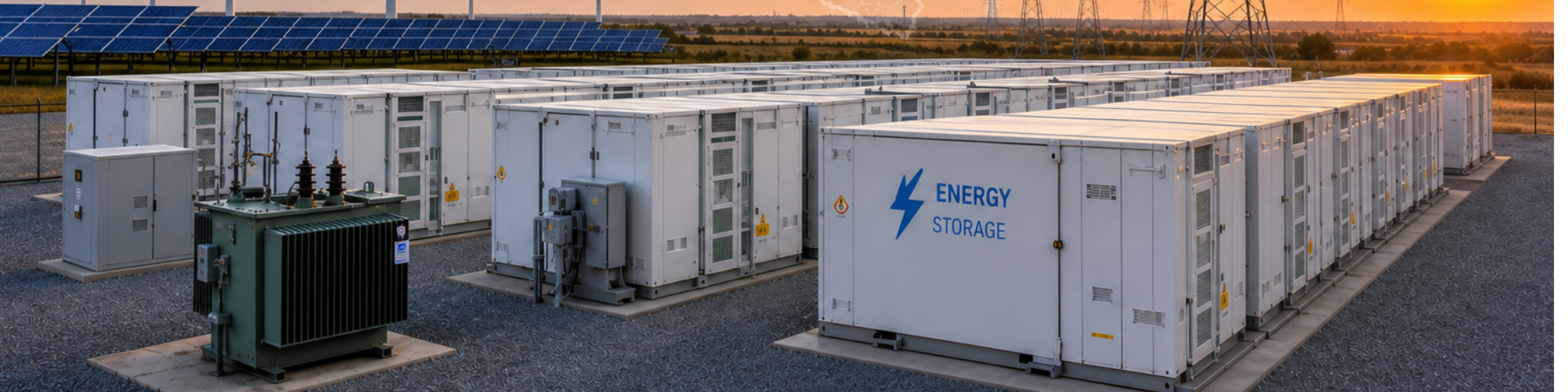
Institutional capital is moving faster into battery storage than most corporate energy buyers realize. The recent acquisition of a 480MWh BESS portfolio in Texas by Frontier Power USA, an LDES-focused investment company, from developer-operator Bimergen Energy is one more data point in a clear trend. Large-scale storage assets are being actively developed, packaged, and acquired, and the organizations that understand what's driving that activity will be better positioned to act on it.
Why ERCOT Keeps Attracting Storage Investment
Texas runs its own grid. That's not a footnote, it's the whole story. ERCOT's energy-only market structure means generators and storage operators get paid for the energy they deliver, not just for being available. That creates a direct financial incentive to dispatch storage when prices are high and charge when they're low. The economics are real and measurable.
The state also has a well-documented history of price volatility. Winter Storm Uri in 2021 put the vulnerability of the grid into sharp focus. Since then, both the regulatory environment and the private investment community have treated storage as a structural need, not an optional add-on. Developers like Bimergen have been building out projects in anticipation of that demand, and investors like Frontier Power USA are now stepping in to acquire and operate at scale.
For C&I organizations with significant Texas operations, this matters. More storage on the ERCOT grid means more price stabilization potential over time, but it also means that the window to secure favorable behind-the-meter or co-located storage arrangements may narrow as the best development sites and interconnection slots get absorbed by large portfolio players.
What Long-Duration Storage Actually Means for Corporate Buyers
Frontier Power USA is specifically focused on long-duration energy storage. That distinction is worth unpacking. Most of the BESS projects you hear about today use lithium-ion chemistry and are designed to discharge for two to four hours. Long-duration storage, by contrast, targets discharge windows of six hours or more, sometimes up to 100 hours depending on the technology.
Eos Energy Enterprises, one of the more prominent LDES developers working with zinc-based battery technology, has been making the case for years that grid reliability at scale requires assets that can carry load through extended periods of low renewable generation. Their aqueous zinc battery systems are designed specifically for multi-hour discharge, which makes them well suited for markets like ERCOT where overnight calm periods or multi-day weather events can stress supply.
For corporate energy buyers, the relevance is practical. If your organization is evaluating BESS as part of a demand charge management or backup power strategy, understanding the difference between a two-hour and an eight-hour system changes your financial model. A two-hour system works well for peak shaving and short-duration outage protection. A longer-duration system opens up different applications, including more meaningful participation in demand response programs or true operational continuity during extended grid disruptions.
The technology options are expanding. Your evaluation criteria should keep pace.
Portfolio Acquisitions Signal Where the Market Is Heading
When an investment firm acquires a portfolio rather than a single project, they're making a statement about scale and diversification. A 480MWh portfolio represents multiple sites, multiple interconnection agreements, and multiple revenue streams. That's not a speculative bet on one project's success. That's a structured position in the market.
For corporate sustainability and energy teams, this kind of transaction is a useful signal. It tells you that the development pipeline in Texas is mature enough to attract institutional capital. It tells you that BESS is no longer a niche or emerging category. And it tells you that the competitive dynamics around site control, grid interconnection, and off-take agreements are intensifying.
If your organization is considering a corporate PPA with a storage component, or evaluating on-site BESS for load management and resilience, you're operating in a market where counterparties are sophisticated and the terms are becoming more structured. That's not a reason to wait. It's a reason to approach the process with the same level of rigor that institutional developers bring to their side of the table.
Knowing what questions to ask, what contract terms to scrutinize, and what technical specifications actually matter for your load profile will determine whether you capture value or leave it behind.
The Carbon and Sustainability Angle Shouldn't Be an Afterthought
Storage is often framed as a grid reliability or cost management tool. Both of those are legitimate. But for organizations with public sustainability commitments, the carbon implications of storage deserve more attention than they typically get.
Battery storage enables higher levels of renewable energy utilization by shifting generation to times when demand is high and renewable output may be low. That time-shifting effect is what makes storage the enabling layer for a credible clean energy strategy, not just a hedge against price spikes. A solar PV system without storage delivers energy when the sun shines. Add storage, and you start to control when that clean energy is consumed and accounted for.
For companies pursuing Science Based Targets, 24/7 carbon-free energy matching, or internal carbon pricing frameworks, the combination of solar and storage changes what's achievable. It moves the conversation from percentage renewable procurement to hourly matching, which is where corporate energy accounting is heading.
Carbon credit programs are also evolving in ways that intersect with storage deployment. Some demand response and grid services programs are beginning to incorporate emissions reduction accounting. Organizations that have storage assets, whether on-site or through structured agreements with IPPs, will have more options to participate in these programs as the frameworks mature.
What C&I Organizations Should Be Doing Right Now
Transactions like the Frontier Power–Bimergen deal are a reminder that the energy storage market is moving whether or not your organization has a storage strategy. The developers are developing. The investors are investing. The grid is changing.
That doesn't mean you need to rush into a decision. It means you should be gathering information, stress-testing assumptions, and building internal alignment now, before a specific project or opportunity is in front of you and you're being asked to move quickly.
Start with your load profile. Understand when your facility draws peak demand, how often that coincides with high grid prices in your market, and what your actual exposure to price volatility looks like. That analysis will tell you more about the right storage configuration than any general market comparison.
Then look at interconnection timelines and incentive windows in your region. The federal Investment Tax Credit for standalone storage is in place, but ITC value can be affected by how projects are structured and when they reach commercial operation. State-level incentives in Texas and other markets have their own timing constraints. Early evaluation isn't just about being prepared. It's about not missing the financial structures that make projects viable.
Finally, think about who you want as a counterparty. The market now includes developers, investors, utilities, and IPPs with different risk profiles, contract structures, and operational track records. Choosing the right partner for a BESS project is as important as choosing the right technology.
Early Planning Is the Actual Advantage
The organizations that benefit most from the current wave of storage investment aren't necessarily the ones with the biggest sustainability budgets. They're the ones that started asking the right questions early. They understood their energy cost structure, identified which resilience risks were real, and built enough internal knowledge to evaluate options clearly when they came up.
The Frontier Power–Bimergen transaction will be followed by others. More capital is entering this market, more projects are moving through development, and the grid services that storage can provide are only becoming more valuable as renewable penetration increases. Your planning process doesn't need to be finished before the market moves. It just needs to be started.
If your organization is operating in ERCOT or any deregulated market with significant renewable growth, now is a reasonable time to get a clear picture of what storage could actually do for you, on the cost side, the resilience side, and the carbon side. That picture will look different for every organization. But you won't know what yours looks like until you start drawing it.