

What Recent BESS Project Announcements Tell Us About the Shifting C&I Energy Market
June 8, 2026
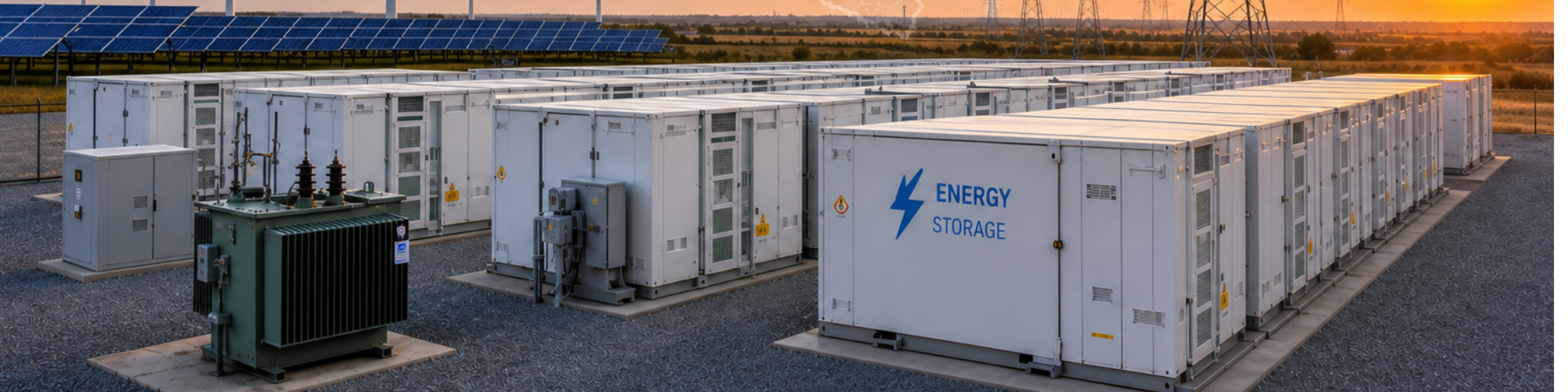
The battery energy storage market doesn't move in straight lines, but lately it's been moving fast. A recent roundup from Energy Storage News highlighted fresh announcements from NeoVolta, Goshe Energy Storage, Frontier Power USA and Stella Energy Solutions, and Prevalon Energy. four companies operating across different segments of the BESS space. Taken individually, each announcement is interesting. Taken together, they signal something worth paying attention to if you're responsible for your organization's energy strategy.
The Market Is Maturing, and That Changes the Conversation
A few years ago, conversations about commercial and industrial battery storage were largely theoretical. The economics were tight, the technology was still proving itself at scale, and most C&I buyers were in a wait-and-see posture. That's no longer where things stand.
Companies like Goshe Energy Storage are carving out focused positions in the storage space, building out project pipelines that reflect real demand from real buyers. Prevalon Energy, which spun out of Mitsubishi Power, has been steadily expanding its BESS platform with a clear focus on utility-scale and large commercial applications. NeoVolta continues to develop its residential and light commercial systems, addressing the distributed end of the market. And Frontier Power USA, working alongside Stella Energy Solutions, is active in the behind-the-meter space where many C&I organizations are starting to see the most immediate financial return.
What this mix tells us is that storage is no longer a niche product for early adopters. It's becoming standard infrastructure. The question for C&I buyers isn't really whether to add storage, it's when and how to structure it so the economics actually work.
Behind-the-Meter Storage Is Where C&I Organizations Feel It Most
Frontier Power USA and Stella Energy Solutions represent a part of the market that deserves particular attention from facilities and operations teams. Behind-the-meter BESS installations sit on or near a customer's property, charge during low-cost grid periods or from on-site solar, and discharge during peak demand windows. The financial impact shows up directly on your utility bill.
For organizations dealing with demand charges. the portion of your electricity bill tied to your highest 15 or 30-minute consumption window each month. a well-designed storage system can shave those peaks consistently. Depending on your utility's rate structure, the savings can be meaningful. Some C&I customers recover their capital costs in under five years.
But the project economics depend heavily on getting the design right from the start. The sizing of the battery system, the dispatch logic, the connection point on your electrical infrastructure, and the incentives you capture during procurement all determine whether the project performs as modeled. That's not a reason to avoid storage. It's a reason to start the evaluation early, before you're under pressure to make a fast decision.
Incentive timing matters too. Federal Investment Tax Credit (ITC) eligibility, state-level rebates, and utility demand response programs each come with their own timelines and qualification requirements. Organizations that begin their feasibility work six to twelve months before they want a system operational tend to capture significantly more value than those who start late.
What Distributed Generation Adds to the Picture
Storage doesn't exist in isolation. Most of the BESS projects generating attention right now are paired with solar PV, and that pairing changes the math considerably. A standalone battery system charges from the grid. A solar-plus-storage system can charge from generation you own, which reduces your exposure to rising electricity prices and gives the system more operational flexibility.
For C&I organizations that already have rooftop or carport solar, adding storage is often the natural next step. For those that don't, evaluating solar and storage together from the beginning usually produces better outcomes than treating them as separate projects.
This is particularly relevant for organizations with sustainability commitments. Pairing solar generation with storage allows you to maximize self-consumption of renewable energy, reduce grid imports during carbon-intensive peak periods, and build a more credible narrative around your actual energy use. not just renewable energy certificates. That distinction matters to investors, customers, and reporting frameworks like CDP and GHG Protocol Scope 2 guidance.
NeoVolta's presence in the distributed market is a reminder that this dynamic isn't limited to large facilities. Smaller commercial properties, multi-tenant buildings, and light industrial users are increasingly finding that the economics work for them too, particularly as equipment costs have continued to decline and financing structures have become more accessible.
Why the Competitive Landscape Should Inform Your Procurement Strategy
The fact that multiple BESS companies are actively announcing projects and expanding their platforms is good news for buyers. More competition generally means more options, more pressure on pricing, and more developers willing to structure creative arrangements. power purchase agreements, energy-as-a-service models, and hybrid ownership structures that reduce or eliminate upfront capital requirements.
But more options also means more complexity in procurement. Not every BESS platform performs the same way. Battery chemistry, inverter design, warranty terms, software dispatch capabilities, and the developer's track record with systems similar to yours all affect long-term performance. A system that looks cheaper at contract signing can underperform against projections if the dispatch logic isn't tuned correctly or if the warranty support isn't there when something goes wrong.
This is where having an independent energy advisor. someone who doesn't have a financial stake in which product you choose. adds real value. They can help you compare proposals on a common basis, stress-test the financial models, and identify the contract terms that actually protect your interests over a 10 or 20-year project life.
Prevalon's continued growth in the large commercial and utility-adjacent space also signals that the technology is being deployed at scale with increasing confidence. That track record filters down to C&I buyers in the form of proven hardware, established installation processes, and financiers who are more comfortable underwriting these projects than they were even three years ago.
Carbon Credits and the Broader Value Stack
One dimension of BESS economics that's still underutilized in many C&I evaluations is the carbon credit opportunity. Depending on your location, how your system operates, and the programs available in your region, a behind-the-meter storage system can generate carbon credits or participate in voluntary carbon markets that add incremental revenue to the project.
This isn't universally available, and the accounting requires care. You don't want to double-count emissions reductions that you're also reporting under your corporate sustainability disclosures. But for organizations that are actively managing a carbon reduction program, it's worth building into the feasibility analysis from the beginning rather than treating it as an afterthought.
The same applies to grid services revenue. Some BESS systems can participate in demand response programs, frequency regulation markets, or other grid services that generate revenue alongside the demand charge savings. Qualifying for these programs often requires meeting specific technical specifications at the time of installation. If you decide later that you want to participate, retrofitting can be complicated and expensive.
The projects being announced by companies like Goshe and Prevalon reflect an increasingly sophisticated understanding of this full value stack. They're not just selling battery systems. They're structuring projects that optimize across multiple revenue streams simultaneously. C&I buyers who understand this are in a much better position to evaluate whether a given proposal is truly optimized for their situation.
Starting Early Is the Real Competitive Advantage
The BESS market is active, the technology is proven, and the incentive environment. while subject to change. currently supports strong project economics for many C&I organizations. The announcements from NeoVolta, Goshe, Frontier Power, Stella, and Prevalon are a useful reminder that this market is moving, and that buyers who engage early tend to get better outcomes.
Early engagement means starting your feasibility analysis before you have a specific deadline. It means understanding your utility rate structure well enough to model what storage could actually save you. It means knowing which incentive programs you qualify for and when those windows close. And it means giving yourself enough time to evaluate multiple proposals properly rather than defaulting to whoever gets back to you first.
If your organization hasn't done a formal energy storage assessment recently, the current market conditions make this a reasonable time to start. Not because there's urgency for its own sake, but because preparation is what turns a good project into a great one.
BioStar Renewables works with C&I organizations to evaluate, structure, and develop solar, BESS, and distributed generation projects that are built around long-term financial and operational performance. If you're thinking about where storage fits in your energy strategy, we're happy to start that conversation.