

Why Better Storm Risk Modeling Is Good News for Solar Project Finance
May 27, 2025
Solar insurance has had a pricing problem for years. Insurers struggled to accurately assess storm and hail risk for large-scale solar assets, which meant premiums were often blunt instruments rather than precise calculations. That's starting to change.
Renew Risk recently launched a catastrophe modeling tool specifically designed to help insurers and reinsurers price the financial risk of severe convective storms for utility-scale solar projects. It's a targeted response to a real gap in the market, and the downstream effects for project developers, asset owners, and corporate buyers of solar energy are worth paying attention to.
The Hail Problem Has Been Quietly Expensive
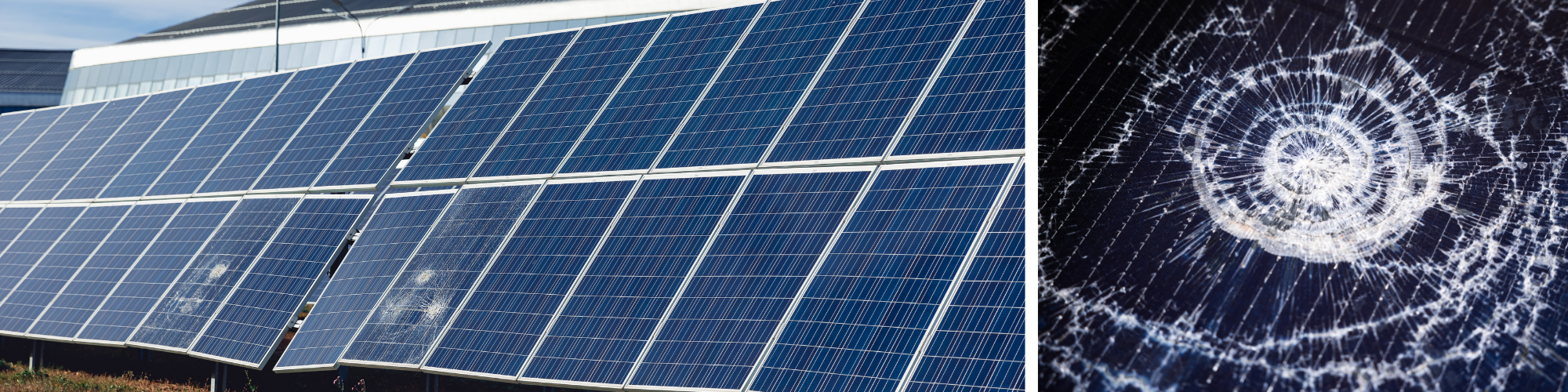
Hail damage is one of the most underappreciated risks in solar project development. A single severe convective storm can shatter hundreds of panels across a large array, triggering replacement costs, lost generation revenue, and drawn-out insurance claims. The losses are real and they're not rare.
The challenge for insurers has been that solar assets don't behave like buildings or crops when a hailstorm hits. Panel vulnerability depends on tilt angle, mounting height, module type, and a range of site-specific variables that traditional catastrophe models weren't built to handle. Without good models, underwriters defaulted to conservative assumptions, which pushed premiums up across the board regardless of actual site risk.
For developers, this created a frustrating dynamic. Projects with strong site selection, quality equipment, and good engineering discipline were being priced similarly to projects with genuine exposure. The market wasn't differentiating well, and that increased the cost of capital for everyone.
What Better Modeling Actually Changes
A purpose-built catastrophe model for solar assets does a few important things. It allows insurers to assess storm risk at a more granular level, factoring in historical weather patterns, geographic exposure, and asset-specific characteristics. That precision matters because it shifts the conversation from broad industry assumptions to site-level analysis.
When insurers can price risk more accurately, a few things tend to follow. Premiums for well-sited, well-engineered projects can come down, or at least stabilize, because the insurer has more confidence in what they're covering. Reinsurance markets can also participate more efficiently, which deepens capacity and reduces the risk of coverage gaps during periods of high storm activity.
For project developers and independent power producers, this is meaningful. Insurance is a real line item in project pro formas. When it's priced conservatively because the market lacks good data, it affects returns, financing terms, and sometimes whether a project gets built at all. More accurate modeling creates a path toward more rational pricing.
It also opens the door for developers to actively influence their insurance outcomes through better design choices. If the model rewards certain panel orientations, hail-resistant modules, or site configurations, developers have a financial incentive to invest in those features upfront.
What This Means for Project Development and Site Selection
The emergence of storm catastrophe modeling for solar should change how development teams think about site risk assessment. Historically, hail and severe convective storm exposure was often treated as a background factor, something noted in a project risk register but rarely quantified with precision. That approach is becoming harder to justify.
Developers who want to optimize financing terms and insurance costs will need to engage with storm risk earlier in the development process. That means pulling historical storm data during site selection, not after, and evaluating how geographic exposure interacts with the project's technical design.
For utility-scale projects in the U.S., the risk profile varies significantly by region. The hail belt across Texas, Oklahoma, Kansas, and into the Midwest presents very different challenges than projects sited in the Southwest or Southeast. A model that captures this granularity gives developers better tools to make informed tradeoffs between land cost, solar resource quality, and storm exposure.
Corporate buyers of solar energy through power purchase agreements should also take note. When the project backing a PPA is better insured against storm risk, the long-term delivery reliability of that contract improves. That's not a minor point for sustainability leaders who are counting on specific generation volumes to meet emissions reduction targets.
Early Planning Is Where the Value Gets Captured
Better catastrophe modeling tools are only useful if project teams engage with the insurance market early enough to act on what they learn. Too often, insurance is treated as a late-stage workstream, something to sort out once permits are secured and financing is nearly closed. That sequencing leaves money on the table.
When insurance underwriting conversations happen early, developers have options. They can adjust module specifications if a particular product carries lower hail resistance ratings. They can revisit tilt angles that increase panel exposure during storms. They can structure operations and maintenance agreements to ensure rapid response after storm events, which matters to insurers assessing total loss scenarios.
Financiers are paying closer attention to this as well. Lenders and tax equity investors want to know that a project's revenue stream is protected against foreseeable risks. A well-documented insurance strategy that reflects current modeling standards is increasingly part of what sophisticated capital providers expect to see.
For C&I organizations developing distributed generation assets or evaluating solar as part of a broader energy strategy, the principles are the same even if the scale is different. Rooftop and ground-mount commercial solar projects face storm exposure too, and the quality of coverage available depends on how well the risk has been characterized from the start.
The Broader Trend Toward Risk-Informed Solar Finance
The launch of a dedicated storm catastrophe model for solar is part of a broader shift in how the energy and insurance industries are thinking about physical climate risk. As the installed base of solar assets grows, and as severe weather patterns become more variable, the demand for precise risk data is only going to increase.
This isn't just an insurance industry story. It connects directly to how solar projects are financed, how corporate energy procurement is structured, and how independent power producers manage the long-term performance of their portfolios. Accurate risk modeling underpins all of it.
The developers and asset owners who will benefit most are the ones who treat risk assessment as a first-order design input rather than a compliance step. That means building relationships with insurers and risk consultants earlier in the development cycle, understanding what models are being used to price their specific assets, and making engineering decisions with insurance outcomes in mind.
Solar energy's role in corporate energy strategy and grid decarbonization is well established at this point. The work now is making projects more financeable, more resilient, and better protected against the physical risks that come with operating large infrastructure assets in a variable climate. Better storm modeling is one piece of that work, and it's a meaningful one.
Start the Risk Conversation Before You Break Ground
The projects that perform best over a 20 or 25 year life tend to be the ones where risk was taken seriously from the beginning. Not as an obstacle, but as information. Storm catastrophe modeling gives the industry better information, and that's worth building into your development process now.
If you're evaluating a solar project or reviewing the insurance strategy for an existing portfolio, it's worth asking whether your current coverage reflects the precision that newer modeling tools can provide. The market is moving, and early movers will have more options.