

School Districts Are Building the Energy Infrastructure That Most C&I Sites Still Haven’t Planned For
That Most C&I Sites Still Haven't Planned For
July 8, 2026
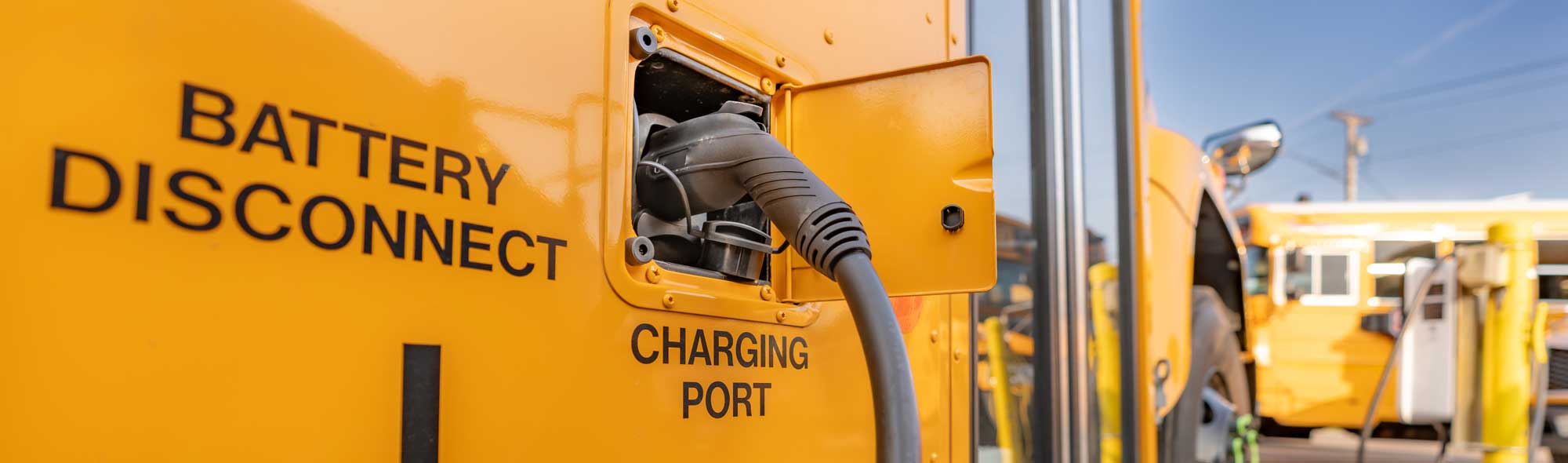
A California school district just commissioned a project that most corporate facilities teams haven't gotten around to yet. A 763 kW solar canopy system, paired with a 1.6 MWh battery energy storage system, will power 35 EV bus charging ports and give the district the ability to island from the Southern California Edison grid entirely. It's not a pilot. It's operational infrastructure built to last decades.
That's worth paying attention to, not because school districts are setting the pace for commercial energy strategy, but because the underlying drivers are exactly the same ones C&I organizations are facing right now.
The EV Charging Load Problem Is Arriving Faster Than Most Sites Are Ready For
Fleet electrification is moving quickly. Whether it's delivery vehicles, company cars, or service fleets, the charging load that comes with EVs is substantial. Thirty-five bus charging ports don't draw a trivial amount of power. They create demand spikes that can trigger utility demand charges, strain existing electrical infrastructure, and expose sites to grid instability at exactly the moment they need reliable power.
The school district's answer to that problem was to build the generation and storage capacity on-site before the load arrived, not after. That sequencing matters. Retrofitting energy infrastructure around an existing charging setup is more expensive and more disruptive than designing them together from the start.
For any C&I organization planning a fleet transition in the next two to five years, the question isn't just how many chargers you need. It's whether your site's energy infrastructure can actually support them, and what it will cost to close the gap. Load modeling, utility interconnection timelines, and storage sizing all need to happen well before the first charger goes in the ground.
Solar Canopies Are Doing More Work Than Just Generating Power
The 763 kW of solar in this project isn't roof-mounted. It's parking lot canopy, which means it's doing double duty. The canopies generate power and provide covered parking, which in Southern California is a genuine amenity. They also free up roof space for other uses and keep the parking lot asset productive during the hours when the buses are out and the chargers are idle.
For corporate campuses, distribution centers, and large commercial properties, parking lot solar canopies are underutilized. Many organizations assume solar means rooftop, and stop evaluating from there. But parking canopies often offer larger contiguous footprints, easier structural permitting, and direct proximity to the electrical loads they're serving. When the charging infrastructure is in the parking lot, putting the generation there too reduces transmission loss and simplifies the overall system design.
The economics have also shifted. Canopy structures have become more cost-competitive, and when combined with the federal Investment Tax Credit and applicable state incentives, the net cost looks different than it did three years ago. Getting an accurate read on where the numbers land for your specific site requires a proper feasibility study, but the default assumption that canopies are too expensive to pencil out is often wrong.
Islanding Capability Changes What Resilience Actually Means
The ability to disconnect from the Southern California Edison grid and keep operating independently isn't a bonus feature in this project. It's a core design requirement. Southern California has seen enough grid stress events, wildfire-related public safety power shutoffs, and extreme heat demand surges that grid-connected-only is no longer a complete resilience strategy for organizations that can't afford downtime.
For this school district, resilience means keeping buses charged and operational when the grid goes down. For a C&I organization, the equivalent might be maintaining cold chain integrity, keeping manufacturing lines running, preserving data center uptime, or simply ensuring that EV fleets can keep moving during a multi-day outage.
True islanding requires more than just having a battery on-site. It requires a system designed from the beginning to operate as a microgrid, with the right inverter architecture, automatic transfer switching, and load management controls to handle the transition cleanly. That's not something you can add to a standard solar-plus-storage system after the fact without significant cost and complexity. Resilience outcomes need to be built into the specification before procurement, not requested as an upgrade later.
What the Incentive Picture Actually Looks Like Right Now
Projects of this scale don't get built on energy savings alone. Incentive stacking is part of how the economics work, and California has one of the richer incentive environments in the country for exactly this type of project.
The federal Investment Tax Credit applies to both the solar and the storage components when the storage is charged primarily by the solar system, which this configuration is designed to do. The Self-Generation Incentive Program (SGIP) in California provides rebates for battery storage, with higher incentive levels available for projects that serve equity-designated facilities or meet resiliency criteria. School districts often qualify for enhanced SGIP tiers. Some C&I organizations do as well, depending on location and project design.
Beyond direct incentives, demand charge management through battery dispatch can significantly reduce monthly utility bills at sites on time-of-use or demand-based tariffs. Southern California Edison's rate structures make this particularly relevant. A well-designed BESS can shift when the site draws from the grid, flattening demand peaks and reducing the portion of the bill that's hardest to control through operational changes alone.
The incentive programs that exist today won't stay static. SGIP funding is allocated in tranches, and popular programs can close or reduce in value. Getting into the queue early isn't about rushing a decision. It's about not being the organization that waited a year too long and found a different incentive landscape on the other side.
Early Planning Is Where the Advantage Gets Built
The school district didn't decide to electrify its bus fleet and then ask how to power the chargers. The energy infrastructure and the fleet transition were planned together. That's the model.
For C&I organizations, early planning means starting the energy assessment before the EV purchase orders are signed, before the lease renewal locks in a facility configuration, and before a utility upgrade request reveals a three-year interconnection queue. It means knowing your current load profile, your site's solar and storage potential, your utility tariff structure, and what resilience actually requires for your operations.
None of that has to be complicated. A competent feasibility study answers most of those questions in a few weeks. What it gives you is a clear picture of what a project should look like, what it will cost, what incentives apply, and what timeline is realistic. That picture is what makes an investment case. And the earlier you have it, the more options you have.
A California school district just demonstrated what it looks like when the planning happens in the right order. The infrastructure is built, the buses will charge, and the grid can go down without disrupting either. That outcome didn't come from reacting to circumstances. It came from deciding well in advance what the site needed to do and building toward it.
If your organization is thinking about fleet electrification, energy resilience, or both, the right time to start the assessment is before those decisions are made for you by circumstance.